|
Submersibles are vessels for underwater explorations. Unlike submarines,
submersibles cannot go very far by themselves; they rely on a larger vessel,
such as a ship, to carry them to their destination, charge their batteries,
or supply air and oxygen. When a ship carrying a submersible arrives at the
location for exploration, the submersible is lowered into the water using a
crane on the ship. Today, submersibles usually remain connected to the larger
vessel by a "tether" or "umbilical".
The first submersibles developed often carried operators and passengers, but
many submersibles these days are "remotely operated vehicles," or ROVs. Instead
of traveling with the ROV, the operator stays on the ship and controls it remotely
by computer, while watching video images sent back by the submersible. ROVs are
particularly useful for exploring in water that is too deep or dangerous for humans.
Here on Whyville, to explore the bottom of the Pacific Ocean for hydrothermal
vents and specimens, you'll want to use one of the following ROVs:
|
|
ABE
ABE stands for Autonomous Benthic Explorer.ABE is a robotic vehicle
that can be programmed to explore the ocean floor to depths of 5,000 meters
(3 miles). In real life, ABE photographs the sea floor using video cameras,
moves along at about 65 cm per second (1.5 mph), and records temperature, salinity
and sea floor magnetism. It can also bring back small samples of rock from the sea
floor. More about ABE
|
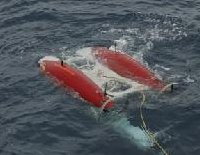
© Woods Hole Oceanographic Institution
(photo courtesy Dan Fornari, WHOI)
|
|
Our Whyville version of ABE specializes in scouring the sea floor and locating
the hottest spot in its surveyed area. Use ABE to help you locate as accurately
as possible hydrothermal vent locations. Expeditions are expensive to run! The
cost of using ABE in real life is $3000 per day. We'll give you a big break on
Whyville: each time you send ABE into the ocean, the cost is only 2 clams.
|
|
Jason
Jason explores the ocean floor to depths of 6,500 meters (4 miles) while
connected by a long fiberoptic tether to its research ship. It's tether is 10 km
(6 miles) long! It delivers power and instructions from scientists on board a
ship to Jason, as well as data from Jason to the scientists. In real life, Jason
can explore for days on end, sampling everything from basic water conditions to
rocks and sediment from the sea bottom.
More about Jason
|
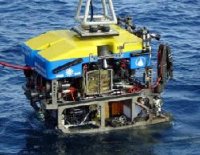
© Woods Hole Oceanographic Institution
(photo courtesy Dan Fornari, WHOI)
|
|
Our Whyville version of Jason specializes in retrieving live specimens from the
ocean floor. Use Jason to discover the local marine life, after you've located a
hydrothermal environment. Expeditions are expensive to run! The cost of using
Jason in real life is $15,000 per day. We'll give you a big break on Whyville:
each time you send Jason into the ocean, the cost is only 4 clams.
|
|
Interested in planning an ocean expedition with ABE or Jason? Click on the "Start"
button below to see a map of the Pacific Ocean. From there, you can choose the
region for your expedition and click "Plan my expedition in this region".

|